Contents of this article:
About subacromial impingement syndrome:
SAIS is the most common pathology of shoulder pain and usually occurs due to compression of the rotator cuff muscles (RCM) by upper structures such as the “AC joint, acromion or CA ligament”, which leads to inflammation/irritation and bursitis development, it usually occurs in patients under the age of 25, especially active adults or manual workers.
****Incidence rate:
- The most common cause of shoulder pain.
- About (40_60%) shoulder disorders.
Subacromial impingement syndrome:
This is inflammation or irritation of the rotator cuff tendon” randomized controlled trial “It travels through the subacromial space, causing pain, weakness, and limiting range of motion within the shoulder joint.
** When the subacromial bursa becomes inflamed and impinges on the rotator cuff tendon, it is known as “Subacromial impingement syndrome”.
What 4 muscles make up the rotator cuff?
Together, these four muscles and the tendons they attach to make up the rotator cuff:
- supraspinatus.
- Infraspinatus.
- Subscapularis.
- teres minor.
Anatomy of the subacromial space:
Where is the subacromial space located?
** It is located below the coracoid shoulder arch and above the humeral head and greater tuberosity of the humerus.
** Beak shoulder arches include:
- acromion.
- Coracoacromial ligament (in front of the acromioclavicular joint).
- coracoid process.

What is the subacromial space?
- Rotator Cuff Tendon Randomized Controlled Trial.
- The long head of the biceps tendon.
- Coracoacromial ligament.
They are all surrounded by the subacromial bag “This helps reduce friction between these structures.”
Pathophysiology of subacromial impingement syndrome
What are the causes of subacromial impingement syndrome?
All of these conditions may be due to wear between the coracoscapulohumeral arch and the supraspinatus tendon or bursa.
- Rotator cuff tendon degeneration.
- Shoulder bursitis.
- Calcific tendonitis.
Can be divided into intrinsic and extrinsic pathological factors:
“It involves rotator cuff tendinopathy due to tension, which includes:
- muscle weakness: Movement of the rotator cuff muscles can cause a muscle imbalance so that the humerus moves proximally in the body.
- Overuse of the shoulder joint: Soft tissue inflammation of the rotator cuff tendon or acromial bursa may result from repetitive microtrauma, which then leads to friction between the tendon and the coracoscapulohumeral arch.
- Degenerative tendinopathy: any Degenerative changes in the acromion will cause the rotator cuff to tear.
“It involves the pathology of the rotator cuff tendon because External compression, for example:
- anatomical factors: Acquired or congenital anatomical differentiation of acromion shape.
- Scapular muscles: Decreased function of the scapular muscles, especially serratus anterior and Trapezius“These muscles normally allow the humerus to pass over the acromion in overhead extension”.
- Glenohumeral instability: Superior subluxation of the humerus due to abnormality of the glenohumeral joint or weakness of the rotator cuff muscles and results in increased contact between the acromion and subacromial tissue.
****Differential diagnosis:
- muscle tear (rotator cuff tear, or long head biceps tear)
- frozen shoulder syndrome (calcific tendonitis or adhesive capsulitis).
- Neuralgia (Thoracic outlet syndrome TOS, cervical radiculopathy, brachial plexus injury).
- Acromioclavicular pathology (arthritis or glenohumeral arthritis).
** Other conditions:
- Hooked shoulders.
- Dyskinesia of the scapula.
- Posterior capsular contracture.
- Tuberosity fracture malunion.
- unstable.
Manifestations of subscapular impingement…
** Onset gradually.
** This is exacerbated by overhead activities and lifting objects off the body.
** Pain at night.
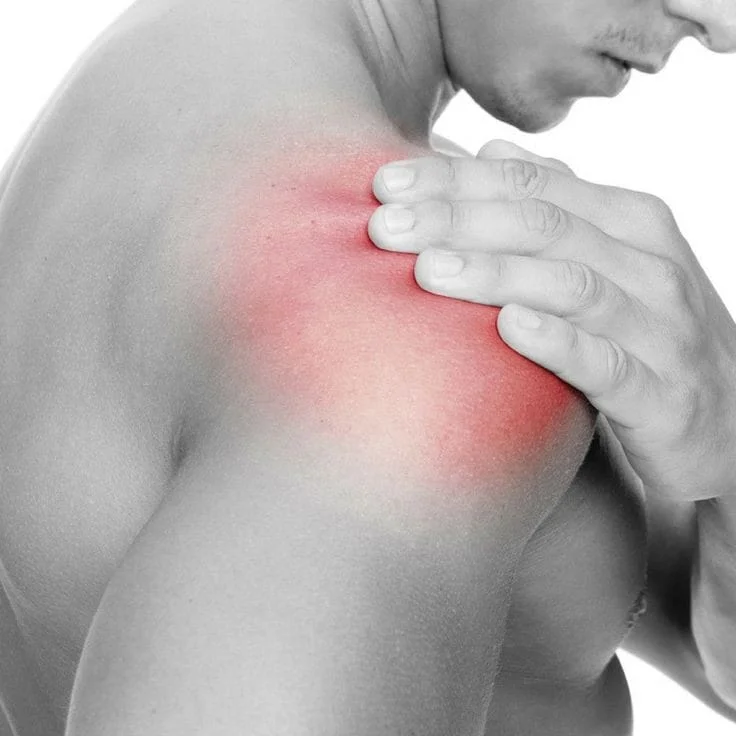
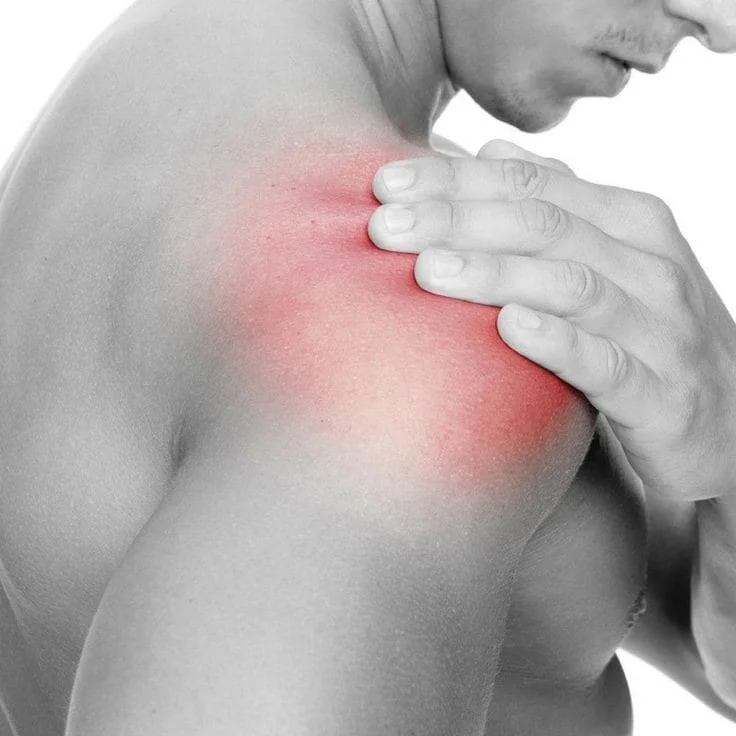
All signs of inflammation that may appear in the shoulder indicate this type of bursitis. These may be:
1. Slight, severe pain in the shoulder, even at rest.
2. In some cases, the shoulders may appear swollen.
3. Reduce shoulder ROM to active or passive ROM.
4. Shoulder tenderness.
5. Touch the warm feeling around the shoulders.
6. In some cases, the shoulders may appear reddish.
- strength: Usually normal.
****The most common specific test signs for subacromial impingement syndrome are:
- Neer impact test:
- The patient’s arm is placed by the patient’s side.
- Rotate the IR fully inward, then passively bend the arm.
- the test is positive: Anterolateral shoulder pain when flexed beyond 90 degrees.
- Hawkins test:
- The patient’s shoulders and elbows are bent to 90 degrees.
- The examiner stabilizes the humerus and passively internally rotates the IR arm.
the test is positive: The pain is in the anterolateral side of the shoulder.

- X-ray: AP view of the shoulder joint.
- NMR:
Used to assess the extent of rotator cuff disease.
Commonly seen in subacromial and subdeltoid bursitis.
****Discover:
- Osteophytes.
- hardening.
- Shoulder bursitis.
- Cystic changes of the humerus.
- The subacromial space narrows.

Accurate image of the rotator cuff tendon and muscle belly.
Accurate image of the rotator cuff tendon and muscle belly
Management and treatment of subacromial impingement:
- Non-surgical:
- Subacromial injection.
- Non-steroidal anti-inflammatory drugs.
- physical therapy.
- operator:
Subacromioplasty or decompression.
** Indications: Failure of non-surgical treatment, at least 4-6 months.
Physiotherapy Management:
- pain manage.
- patient educate: Change the type and amount of exercise, physical activity, and home or work activities you do.
- ROM practice: because Limits the range of motion of the shoulder joint and scapula. This will increase stress on various structures.
- manual practice: Gently mobilizes muscles and joints.
- Stretching and strength exercises:
Muscle weakness or imbalance can lead to shoulder impingement as the scapula deviates due to muscle weakness, a physical therapist will design a safe, individualized and progressive resistance program based on the extent of the injury.
- Functional training: During the final phase of recovery, minimize the stress on your shoulders.
****complication:
- Deltoid dysfunction.
- Go forward and escape.
****in conclusion:
Acromial bursitis occurs when the acromial bursa becomes inflamed. When this bursa becomes inflamed, it swells and appears larger. This makes it hit the tendon of the supraspinatus and irritate it.
****refer to:
https://www.sciencedirect.com/science/article/pii/S003058982031590X
https://www.healthline.com/health/bone-health/rotator-cuff-anatomy#anatomy
https://www.orthobullets.com/shoulder-and-elbow/3041/subacromial-impingement https://www.sciencedirect.com/science/article/abs/pii/S003194060400197X
https://teachmesurgery.com/orthopedic/shoulder/subacromial-impingement-syndrome/