Table of contents[Hide][Show]
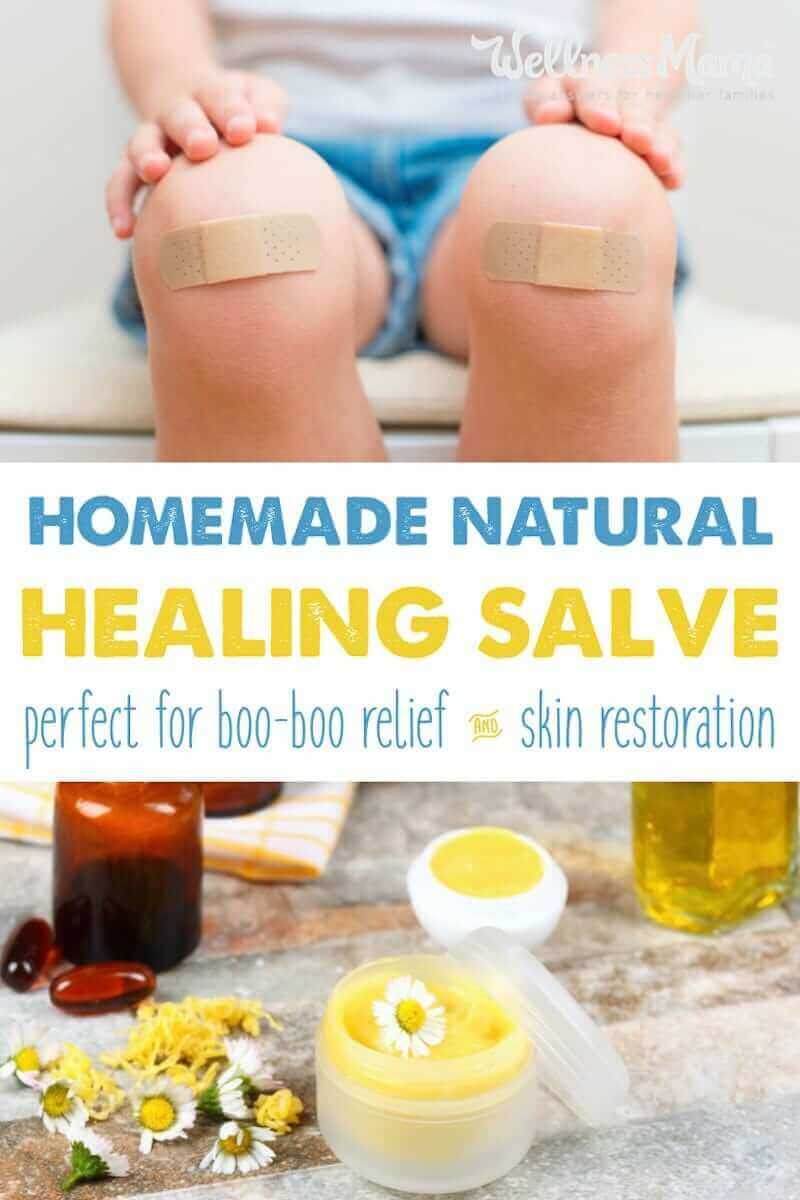
Last week, in one day, three of my kids needed Band-Aids for one reason or another. It’s a common occurrence for six kids who love to climb, jump and live in tree houses. I decided to look for a natural ointment to replace traditional ointments like Neosporin.
How to Use Healing Salve
I don’t like Neosporin because it’s made with petroleum jelly. Plus, there are plenty of natural alternatives that are just as effective.
My homemade healing salve (the kids call it “pesh lotion”) is great for cuts, scrapes, stings, poison ivy, and skin irritations. It also helps relieve diaper rash and baby skin irritation. For cloth diapers, be sure to line them with a disposable liner first.
This herbal healing salve is also great for treating eczema, scrapes, abrasions and insect bites. It moisturizes dry skin and cuticles. If you have skin problems, this healing ointment may help.

ointment herb
So how can one ointment do so much? The herbs here are naturally antibiotic, anti-inflammatory, anti-fungal and astringent. This makes it a perfect addition to any herbalist’s first aid kit.
- Echinacea – Antibacterial, analgesic and anti-inflammatory. Can help prevent the spread of infection from venomous snakes and insects. Good for burns. There are risks in the wild, so choose a cultivated source (or grow your own!).
- Comfrey – Nicknamed “Bone Weaving” for its ability to heal broken bones quickly. Stimulates tissue repair for rapid healing. For sprains, swelling, bruises, anti-inflammatory, antiseptic.
- banana – Known as the “Indian Band-Aid” by the Cherokee. Use on bites, stings, cuts, scrapes, poison ivy and sunburn. Plantain balm helps remove splinters and stingers. Stimulates collagen growth and speeds up wound healing.
- calendula – Anti-inflammatory, astringent (tightens loose tissue), antibacterial, antiviral and antifungal. Use on cuts, burns, diaper rash, bites, sprains, bruises, rashes, sunburns, abrasions, and slow-healing wounds.
- Yarrow – Helps restore stagnant or congested blood flow while also helping to stop bleeding. It has wound, antibacterial, anti-inflammatory, astringent and analgesic effects.
- rosemary – Antiseptic, antibacterial, antifungal. Showed positive results against drug-resistant infections. Stimulates blood flow to the area, relieving muscle pain and joint inflammation. It is also good for sores, bruises, cuts, eczema and sprains.
Things to Note About Comfrey
Since comfrey heals the skin quickly, it’s important to use it with other herbs. You don’t want the skin to heal so quickly that it becomes infected. Help prevent this problem by using antibacterial herbs like rosemary and echinacea.
other ingredients
You can also add some lavender essential oil or tea tree oil for extra skin benefits. Lavender is a natural antihistamine, so it’s great for soothing itchy skin and stings. Tea tree is a potent antifungal agent that also relieves itching. You can use any skin-friendly essential oil blend you like here. Frankincense, chamomile, and helichrysum are more options.
It’s easy to make, and some of the ingredients even grow in your front yard in the summer. One of the herbs I use is plantain, which grows in most parts of the United States and is very good for the skin. You may also be able to find yarrow that grows wild in your area. All of the above herbs have many uses, and some can also be taken internally or in food.
Almost any liquid oil will work for this recipe, but I usually use olive oil. If you’re using coconut oil, you may need to cut down on some of the beeswax, or the beeswax will get too hard at cooler temperatures. Sunflower oil, almond oil, and grapeseed oil are more options.
choose your container
The ointment fits in a metal or glass jar. I prefer jars that are easy to travel with and don’t have to worry about cracking glass jars. Lip balm tubes are another great option. These make it really portable and easy to apply.
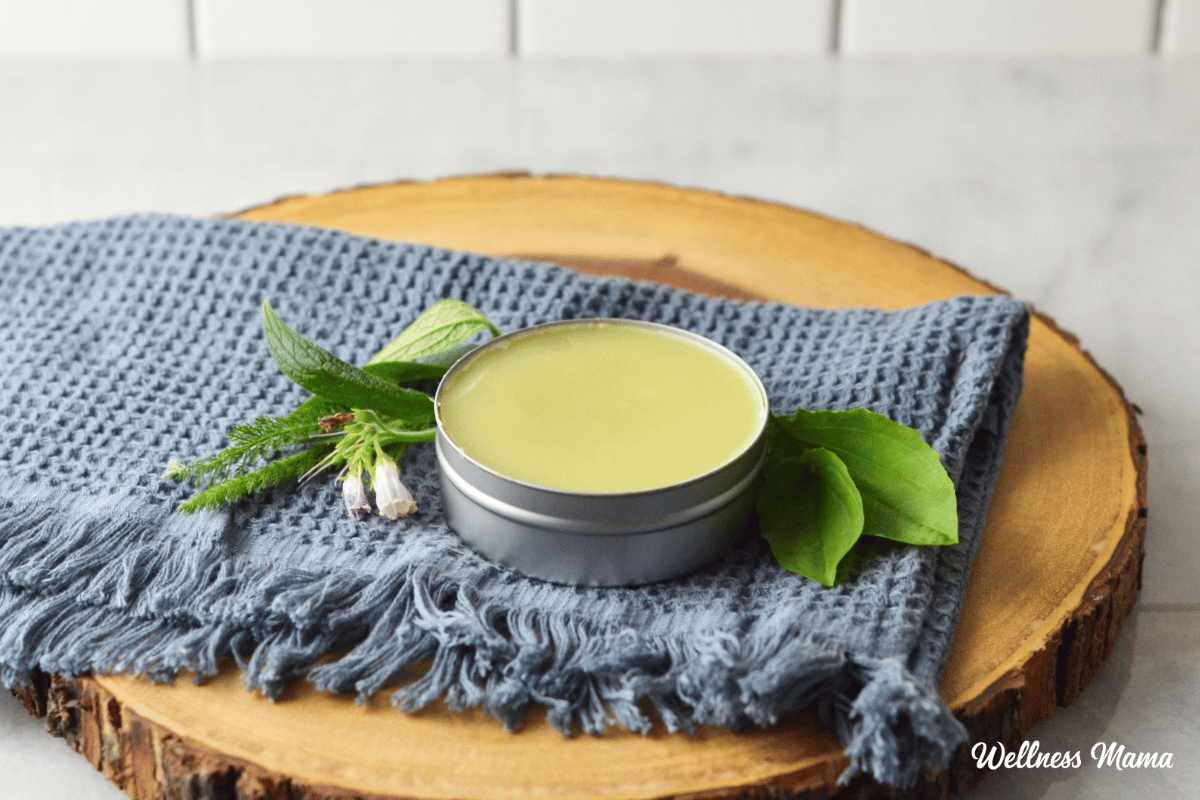
Healing Salve Recipe

This healing ointment is a natural alternative to antibiotic ointment. Great for all kinds of cuts, scrapes, rashes, and more.
instruct
infused with herbs
-
Place the olive oil and herbs in a jar with an airtight lid for 3-4 weeks, shaking daily. This option does not work with coconut oil.
-
Or heat the olive oil (or other oil) and herbs in a double boiler over low heat for 3 hours (low heat!) until the oil is green.
-
Another option is to put the herbs and oil in a glass bottle with a lid. Place it in a water bath in a pot, set to low heat, and let it soak for at least 24 hours. Add water to slow cooker as needed.
making ointment
-
Pour oil into cheesecloth and strain out vanilla. Squeeze the cheesecloth to squeeze out as much oil as possible.
-
Compost the herbs.
-
Combine the infused oil and beeswax in a double boiler.
-
Cook over low heat, stirring occasionally, until the wax has melted.
-
Add essential oils if desired.
-
Pour into small jars, glass jars, or lip balm tubes and use as needed.
notes
Store in a cool, dry place for up to 2 years.
Storage and shelf life
This healing salve can last a year or more if stored properly, so I make large batches. However, you can reduce the size if desired. I always keep it on hand when I’m gardening for skin irritations and bug bites. Just be sure to store it in a cool, dry place away from light and heat.
Adding some vitamin E helps extend shelf life and prevents the oil from going rancid so quickly.
Ever make your own salve? Share it below!