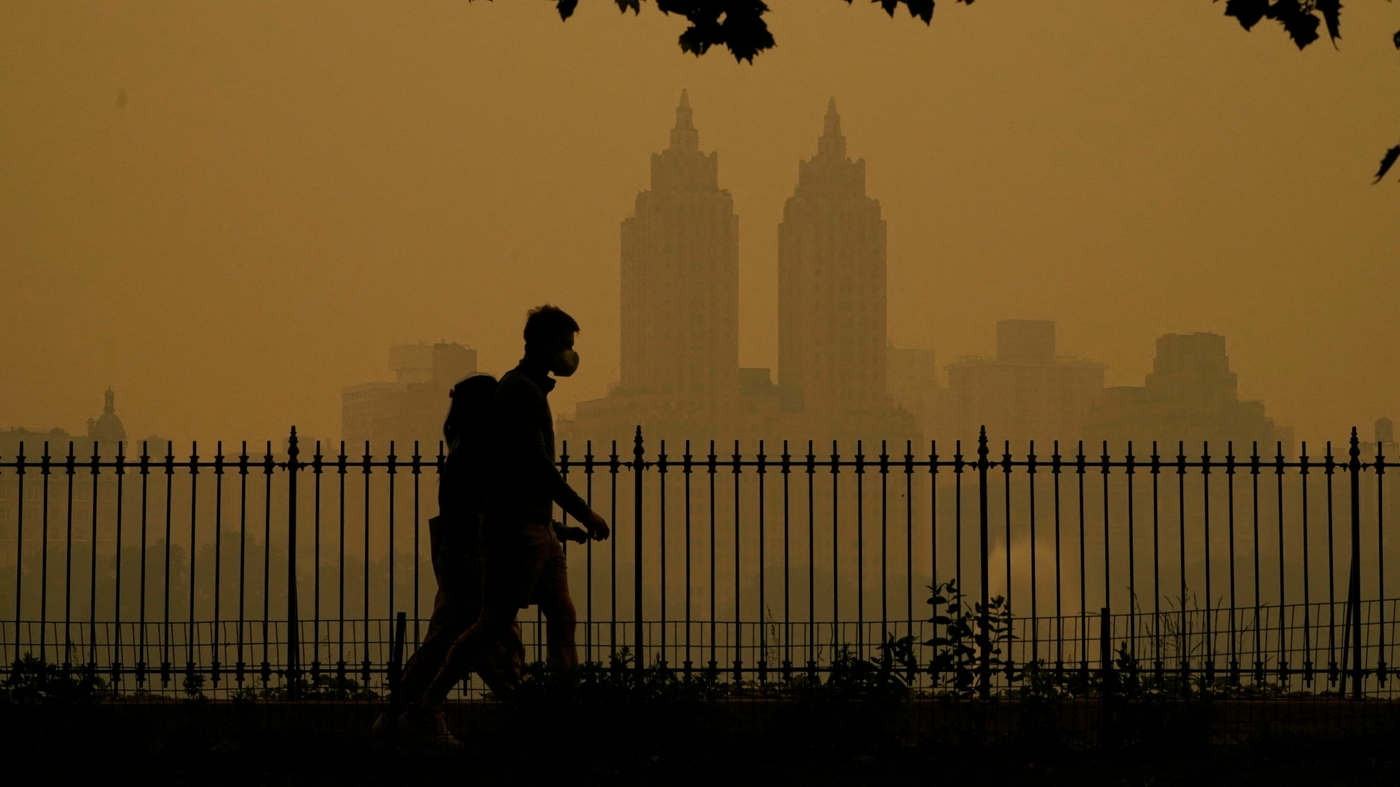

The smoky air is filled with tiny flakes of particulate matter that can enter the lungs and even the bloodstream.
Timothy A. Clary/AFP via Getty Images
hide title
switch subtitles
Timothy A. Clary/AFP via Getty Images
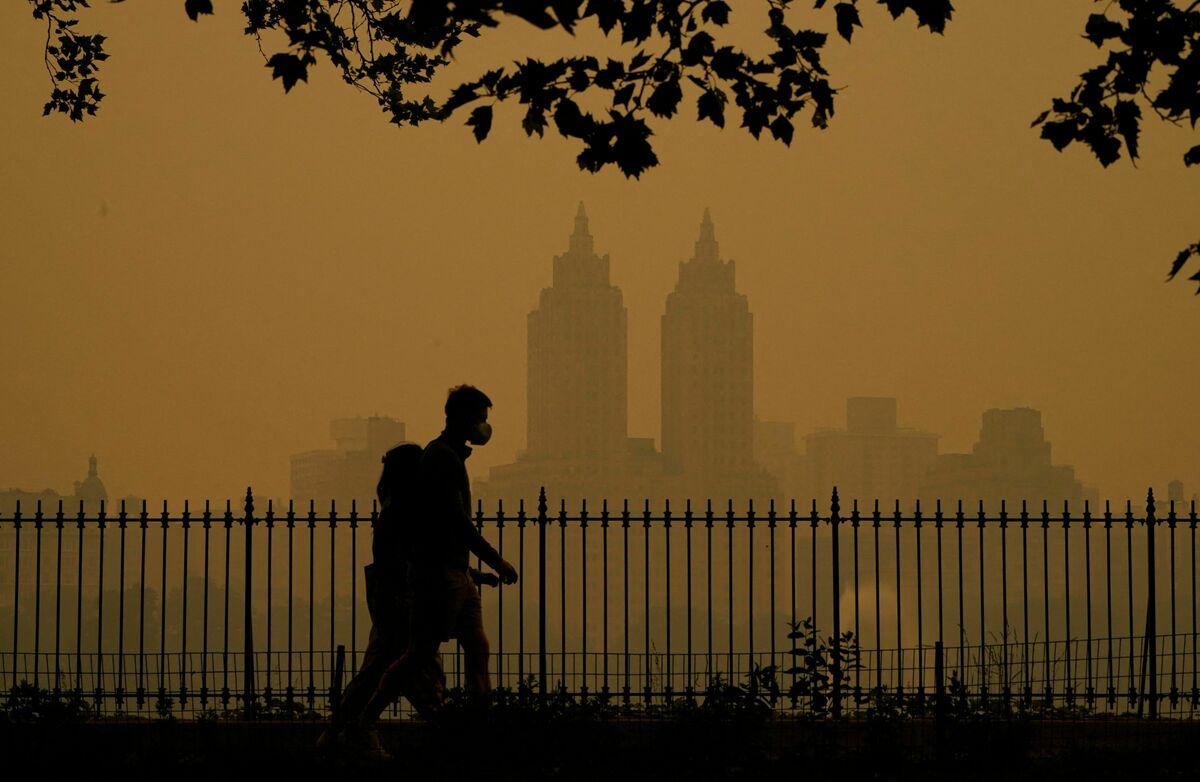
The smoky air is filled with tiny flakes of particulate matter that can enter the lungs and even the bloodstream.
Timothy A. Clary/AFP via Getty Images
A thick yellow smog blanketed much of the eastern United States this week, while New York City has some of the worst air quality in the world. Dr. Ravi Kalhan, a pulmonologist at Northwestern Medicine, likens it to New Yorkers smoking a pack of cigarettes a day.
The health risks of long-term smoking are well known, but what are the dangers of short-term exposure to wildfire smoke, such as that from Canadian wildfires still drifting south?
“I think everyone is at some level of risk when air pollution levels are at these levels,” said Dr. Keith Brenner, a pulmonary and critical care physician at Hackensack University Medical Center.
However, people with lung conditions such as asthma or COPD (chronic obstructive pulmonary disease) are at greatest risk.
Smoky skies can cause itchy eyes, sore throats, headaches, and even a little nausea. But fine particulate matter — particles 2.5 microns in diameter or smaller — are the biggest health hazard. These particles get into your lungs, and in people with lung disease, they can trigger a flare-up. “At worst you might even have to be hospitalized,” Brenner said.
Poor air quality can also be a problem for people with cardiovascular disease.
Studies by the Environmental Protection Agency and others have found that exposure to particle pollution increases hospitalizations for serious cardiovascular events such as heart failure, stroke, heart attack and death.
Pregnant women and children — especially those with asthma — are also more vulnerable to exposure to wildfire smoke. Children breathe faster and inhale more polluted air, said Dr. Lisa Patel, a pediatrician at the Stanford Medicine Children’s Health Center. “Kids are easier to start because their airways are smaller. So even a smaller amount of inflammation can hit a child harder,” Patel said. This is especially true for children under the age of 5.
Breathing in polluted air can also affect fetal development. “So I think pregnant women should do what they can to avoid exposure on days when levels are this high,” Brenner said. He also pointed to several studies showing that when air pollution levels are high, hospitalization rates for children with asthma attacks increase.


So, what’s the best way to reduce your exposure to dangerous air pollution?
First, check the air quality where you live by visiting the EPA website airnow.gov, which has a color-coded gauge showing the air quality in your area. If the air is rated as unhealthy, the best advice is to stay indoors as much as possible and keep windows and doors closed.
If there’s a crack under the door where the air gets in, Linsey Marr, an aerosol expert at Virginia Tech, recommends rolling up a towel to block it. If you have an air purifier, “turn it on high so you can filter as much room air as possible,” Marr says.
Air purifiers can be expensive, so if you don’t have one, Patel advises, make one yourself. Getting a HEPA filter “and hooking it up to a box fan reduces indoor air pollution by about 50 percent,” she says. And try to avoid anything that makes your indoor air quality worse. “If you have a gas stove, try to avoid it,” says Patel. Do not vacuum or burn candles, as that will only increase the particulate matter in the indoor air.
And drink plenty of water. The fluid keeps your eyes, nose, and throat moist and helps reduce irritation. In addition, outdoor sports should be avoided when the air is bad. Exercise allows you to breathe deeper, bringing any particles in the air deeper into your airways.
Finally, if you do have to go outside – wear a mask! “Just like with COVID, the best masks will be high-quality, well-fitting, what we call respirators, N95 or KN95,” Marr said. Surgical or cloth masks are better than nothing, but they don’t offer very good protection. N95 masks can filter out 95% of smoke particles if worn properly and dirty air does not leak from the sides.
You know the drill: cover your nose and mouth.